

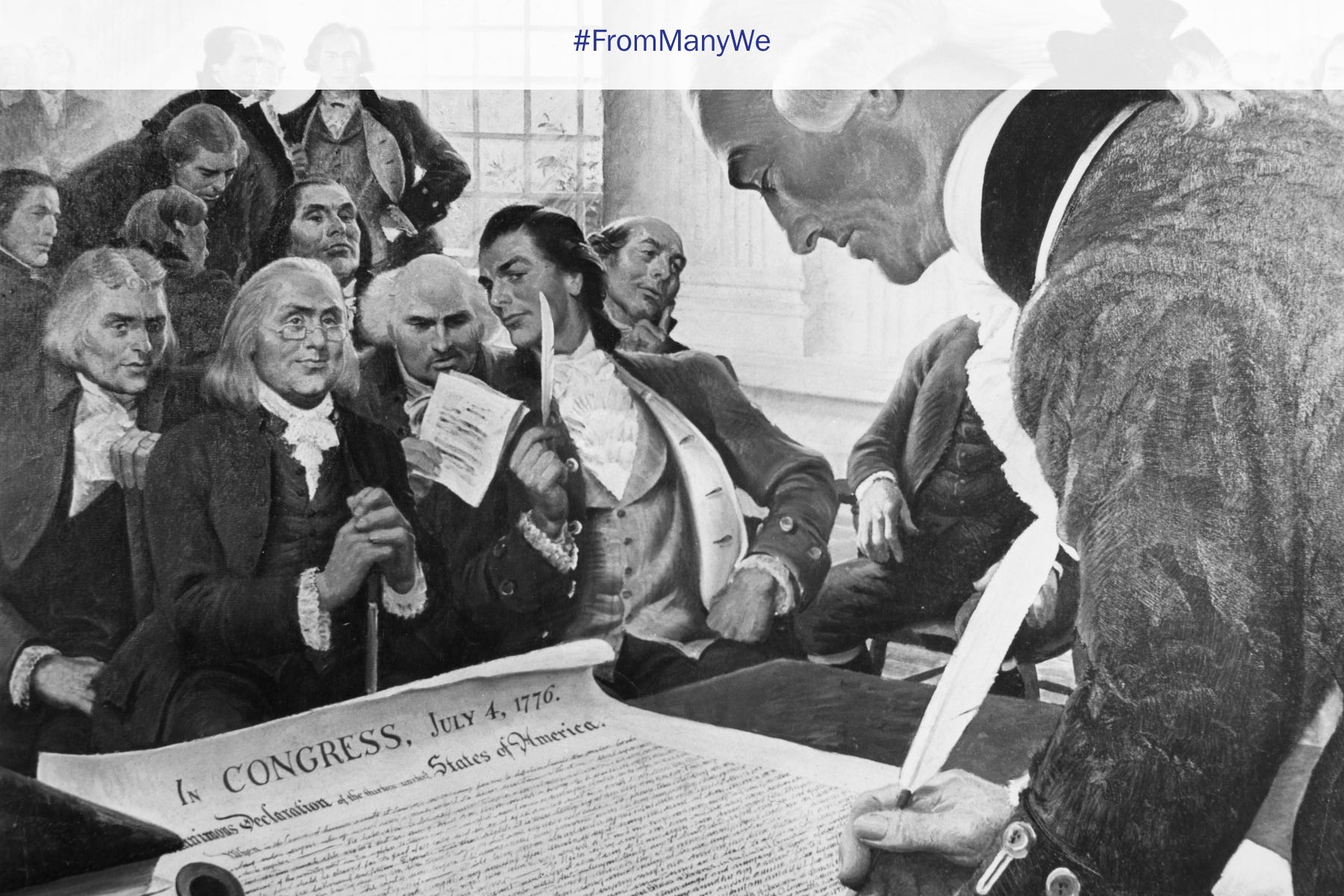
After affixing his iconic signature to the Declaration of Independence in 1776, John Hancock noted that the signatories must “hang together.” In a perhaps apocryphal response, Benjamin Franklin quipped, “Yes, we must, indeed, all hang together, or most assuredly we shall all hang separately.”
As we mark our nation’s 250th year, there is little doubt we are a nation divided along party lines. Partisan polarization in Congress is as stark as it has ever been. Political donors are polarized. Even the courts, purportedly the institution most insulated from politics, have become more partisan and polarized. And this hyper-polarization is hardly limited to political elites. Rank-and-file Democrats and Republicans are deeply divided. In the last few decades, partisans have grown further apart ideologically, with those on the left consistently finding their way to the Democratic tent and those on the right ending up in the GOP. This sorting has produced partisan identities that are highly correlated with other social identities (e.g., rural versus urban, secular versus religious). And there has been a remarkable sorting of American partisans by basic worldview.
This partisan divide appears to color both how Americans feel about celebrating our nation and what that nation is all about. Our national University of Massachusetts Amherst Poll has shown Americans are deeply split on some core matters. But there is also a shared undercurrent of belief and hope that we should and will continue to hang together as a nation.
A sizable majority of Republicans, 62%, view the 250th commemorations as a “proud national milestone,” while Democrats tend to describe our 250th anniversary as either something they don’t think about much, 29%, or as a chance to reflect on the nation’s unfinished work, 25%.
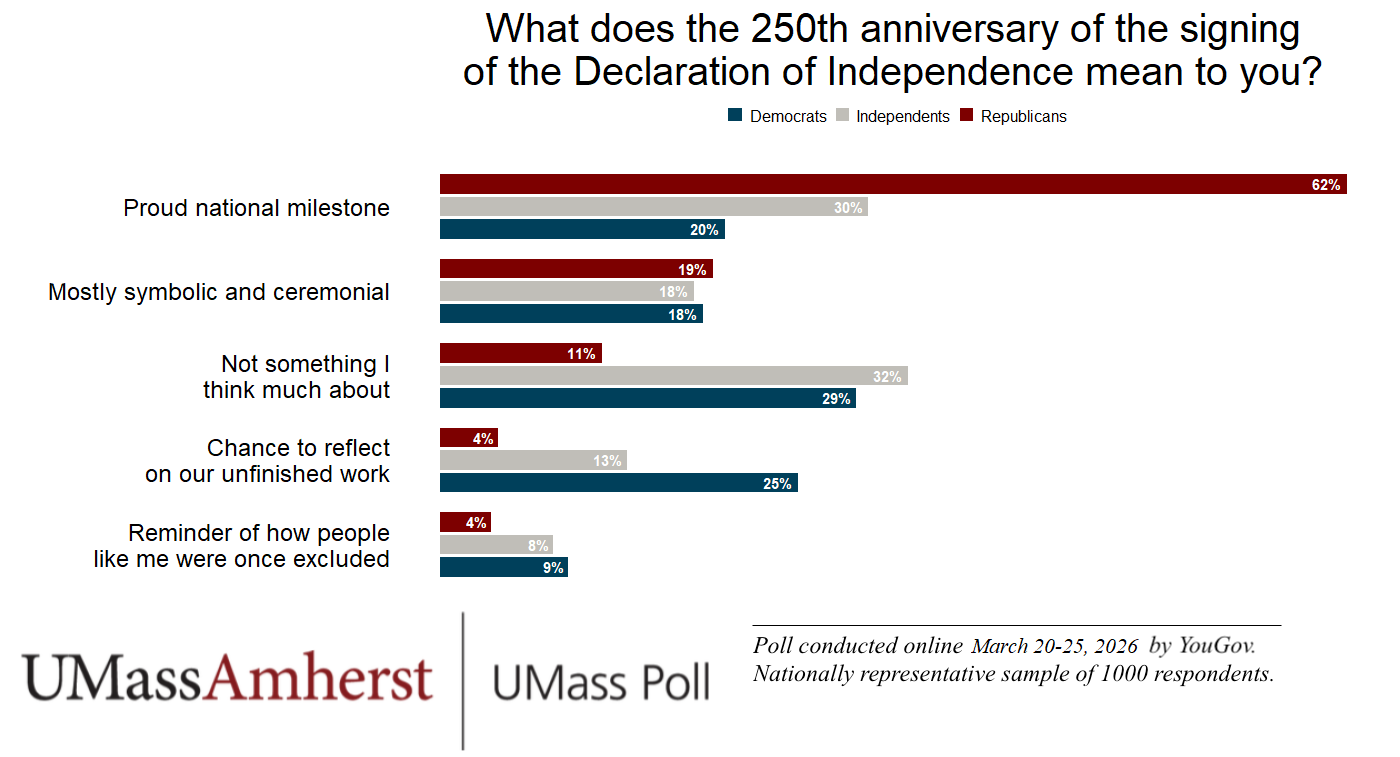
The recent Democracy for All Project report found hints of this unease with only 25% of Americans saying the people’s role in the democratic process is working well.
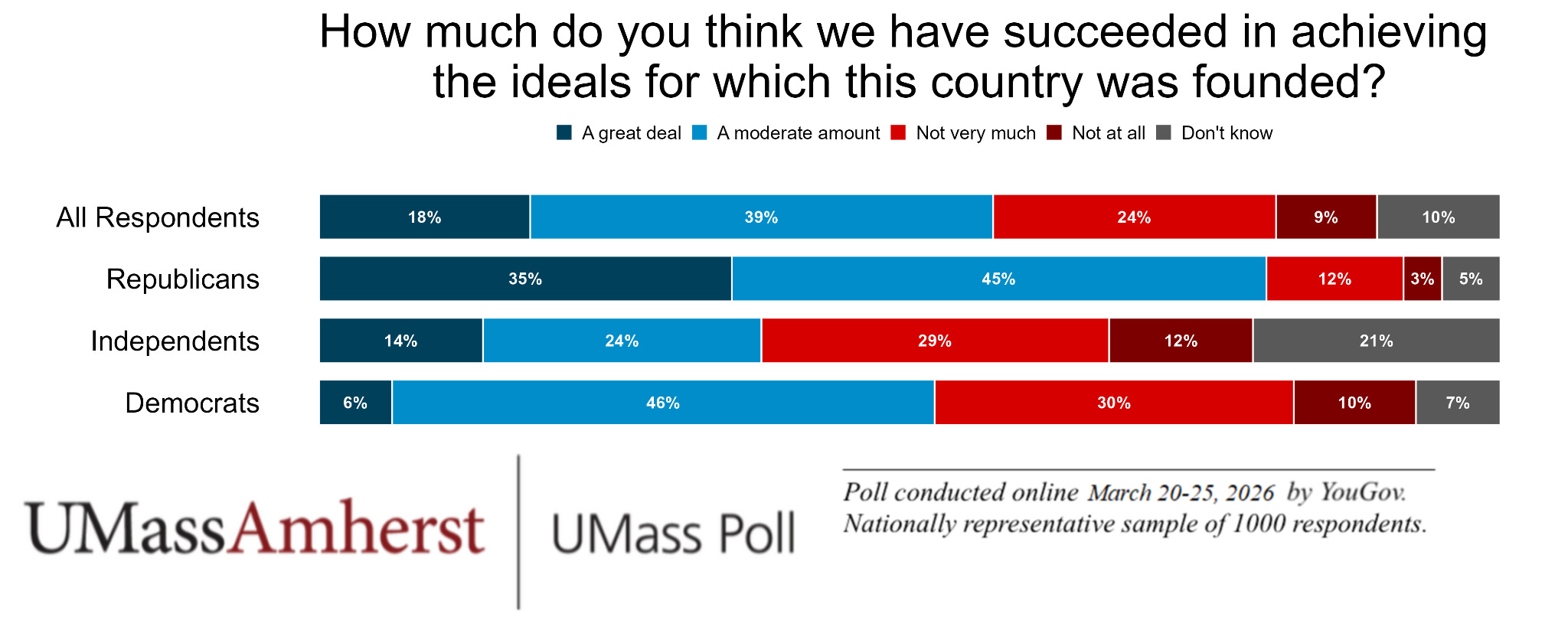
We are divided about the extent to which we are living up to our ideals. The UMass Amherst Poll shows a majority of Republicans, 80%, think we’ve already succeeded a great deal or a moderate amount in achieving our founding principles. Only 52% of Democrats agree.
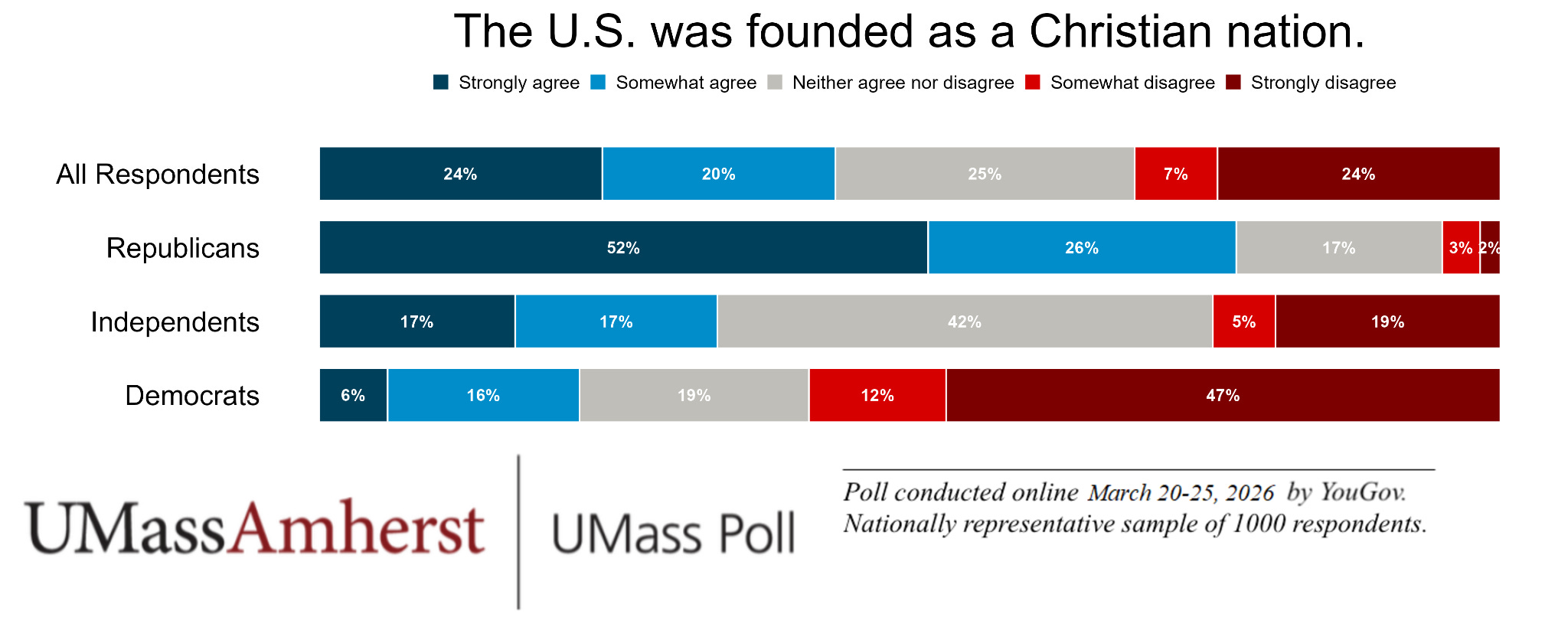
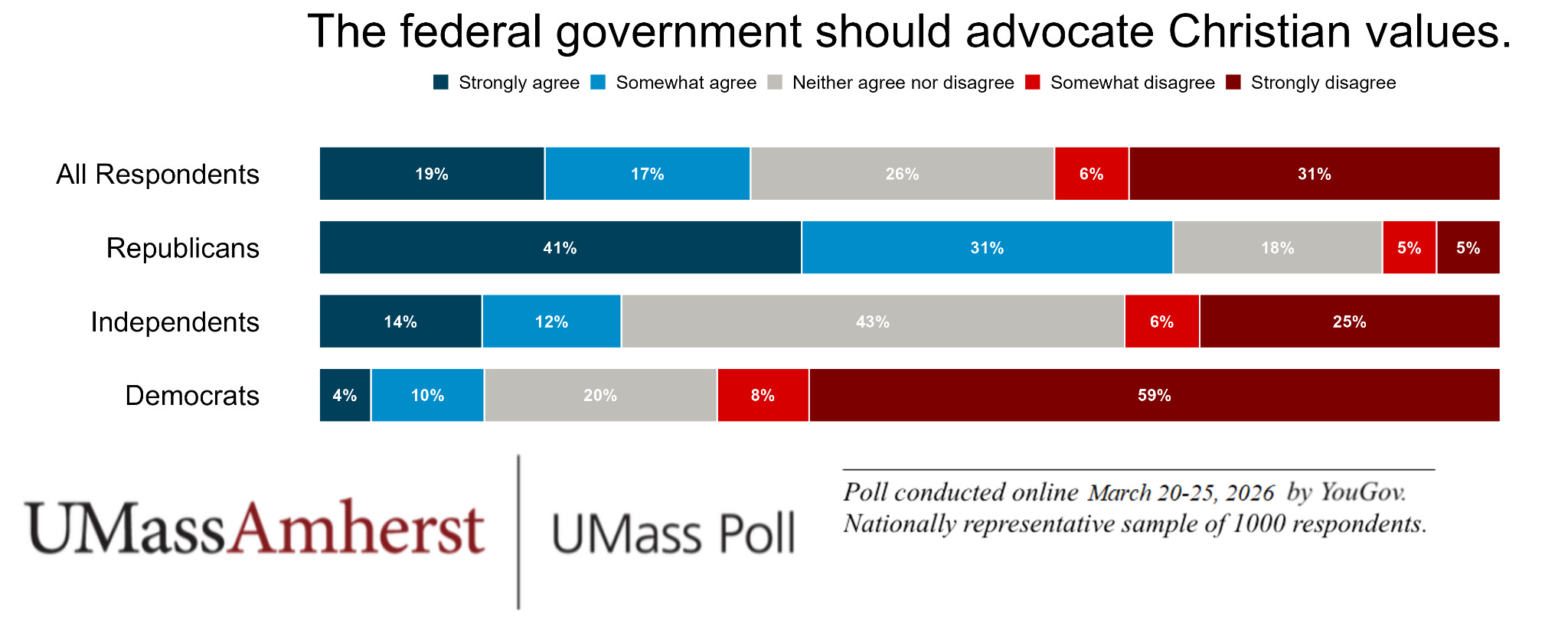
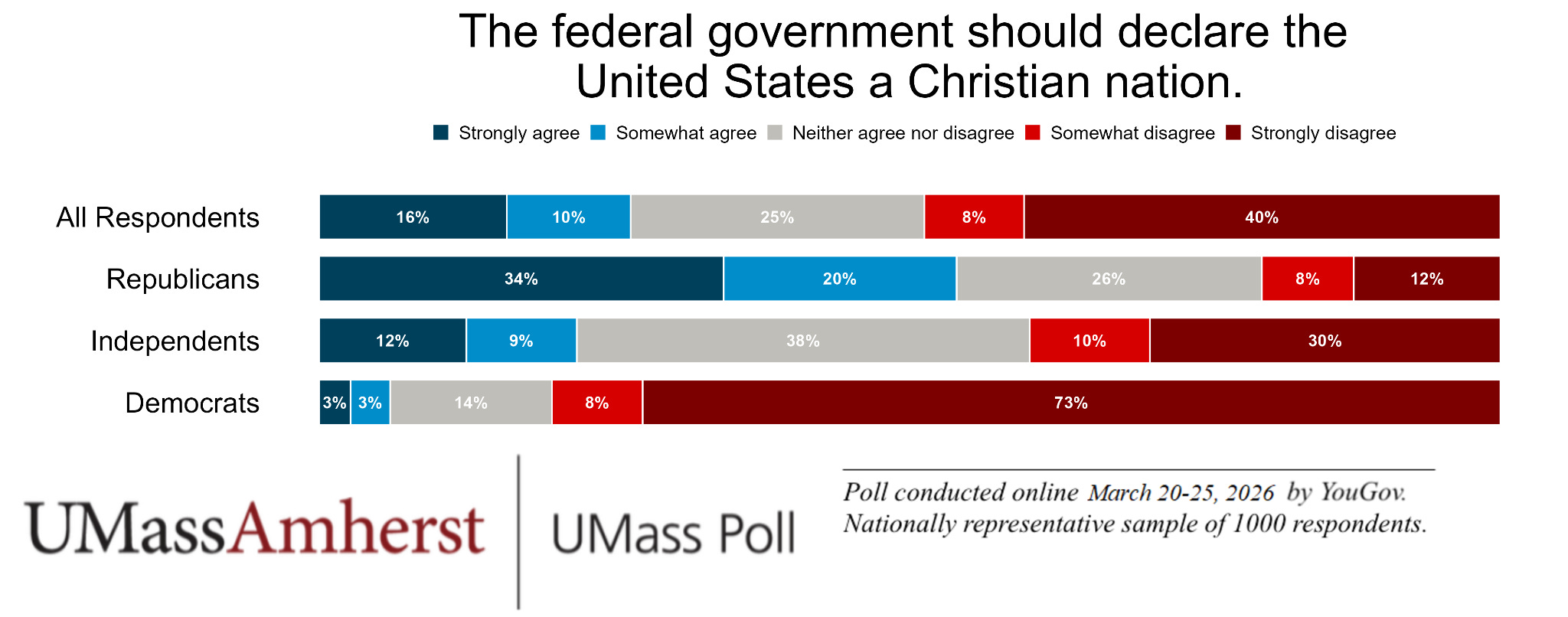
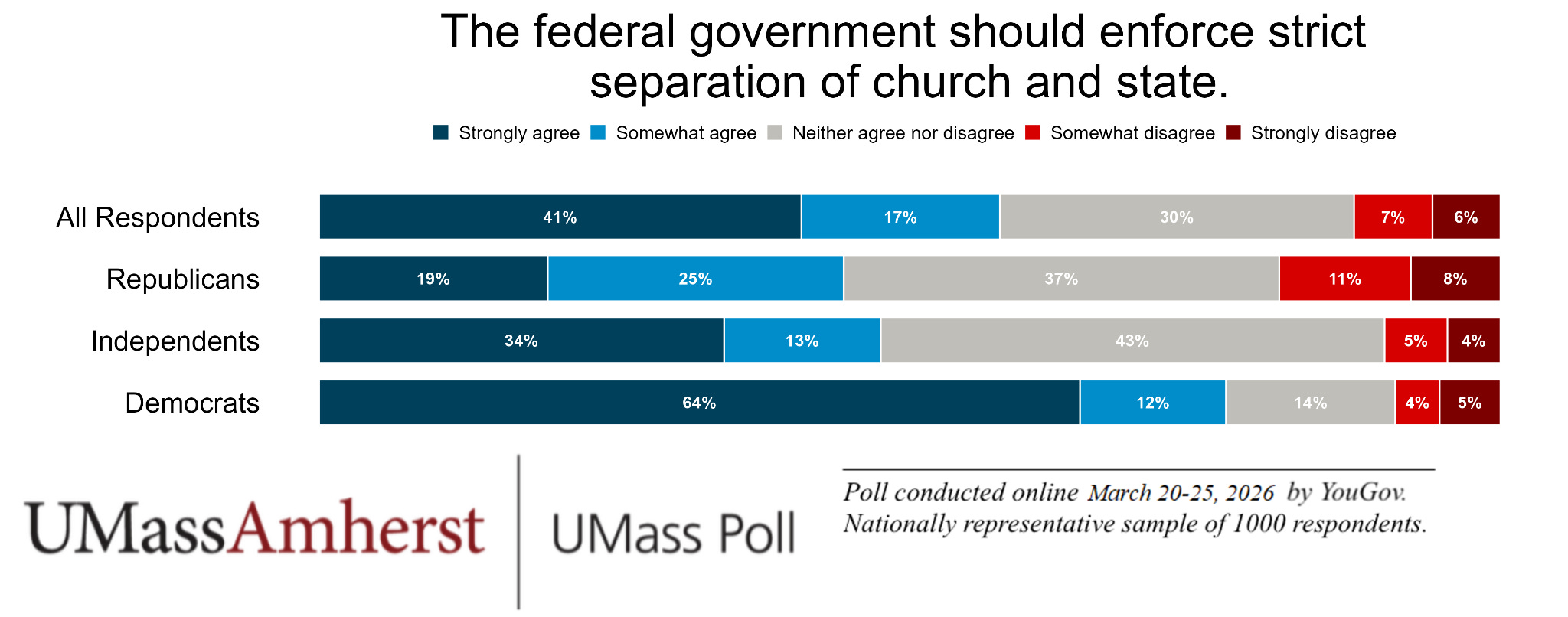
We are deeply split on the religious basis of those founding principles and American ethos. In the UMass Poll, we see a gaping chasm between Democrats and Republicans on whether the United States was founded as and should now be a Christian country. Nearly 80% of Republicans believe the US was founded as a Christian nation. A majority of GOP respondents, 72%, believe the government should advocate Christian values, while 54% of Republicans believe the US should be declared a Christian nation. Democrats are not on board with these views, and more than three-quarters, 78%, believe the government should strictly enforce the separation of church and state.
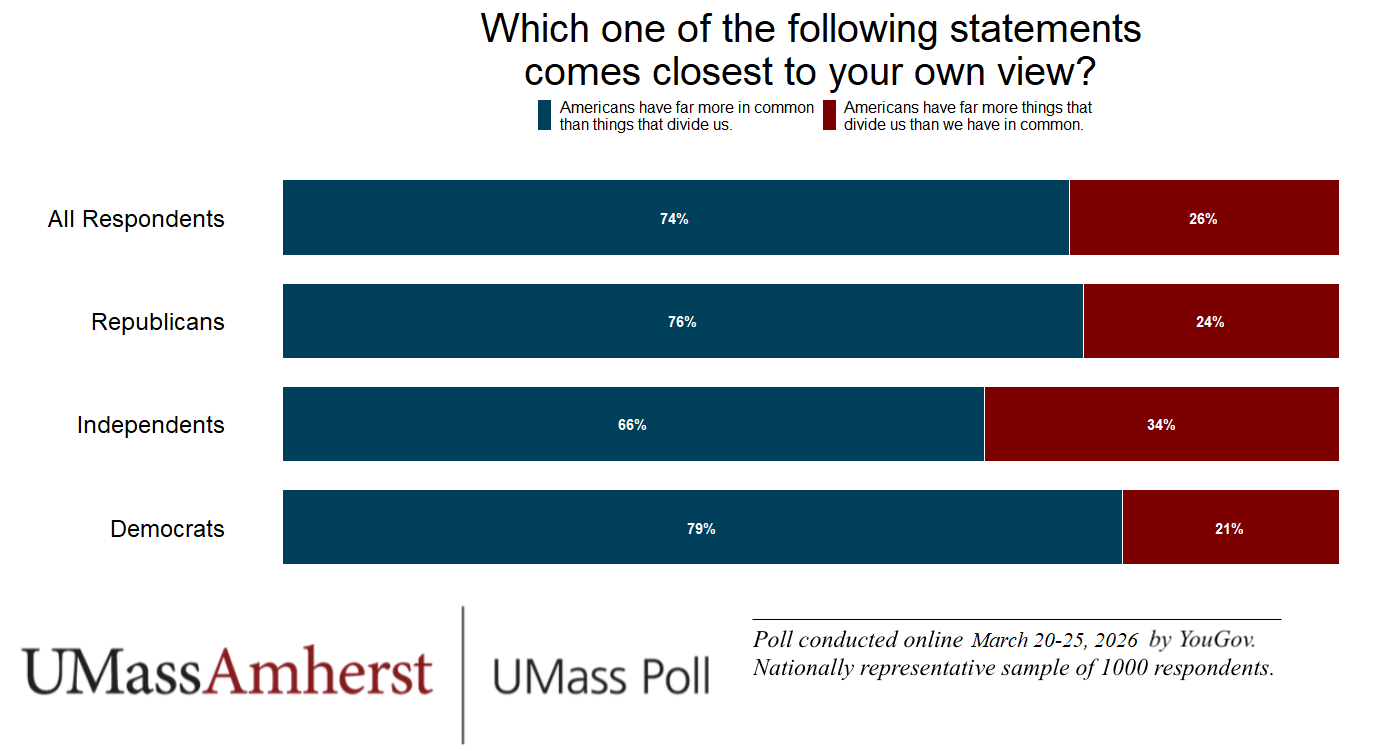
Despite all this division over core values and the state of our nation upon reaching this chronological milestone, Democrats and Republicans agree that we have far more in common than things that divide us—79% and 76%—respectively. And just a tiny fraction want to see us go our separate ways. Only about 10% of both Democrats and Republicans believe the United States would be better off if we split into two nations.
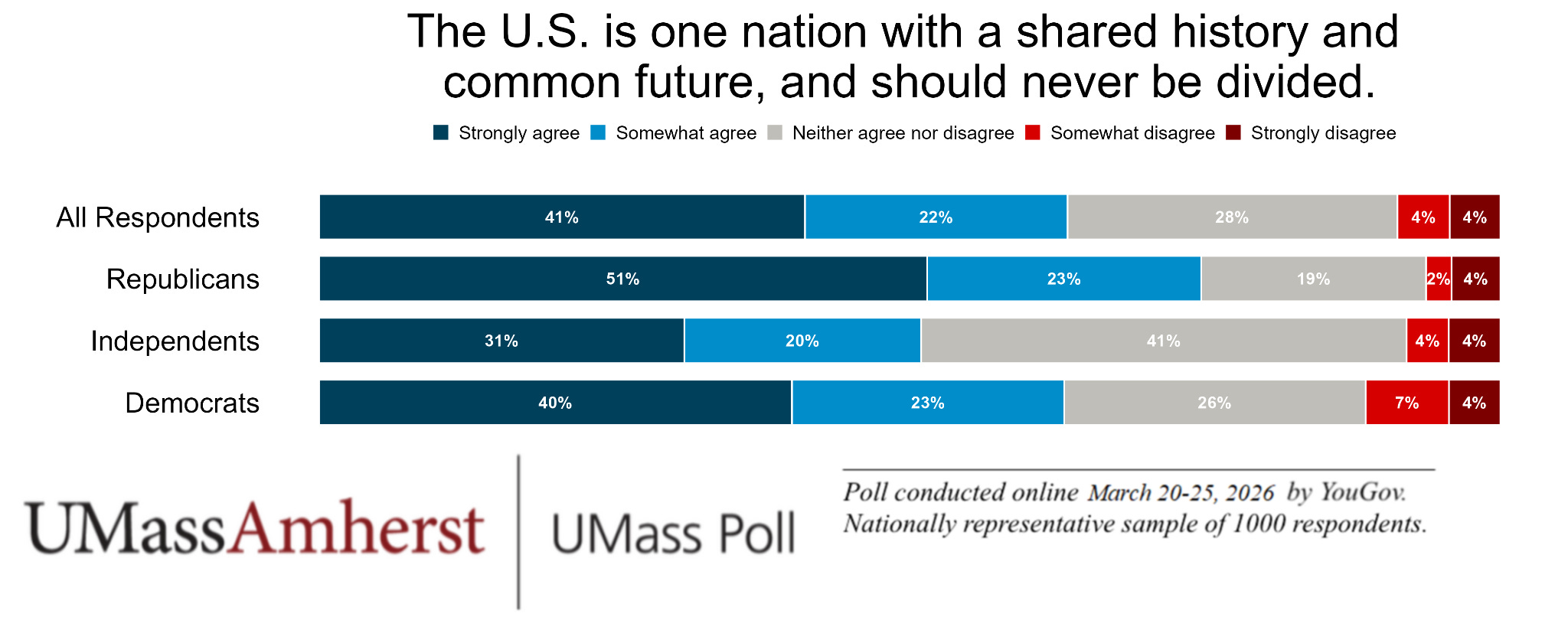
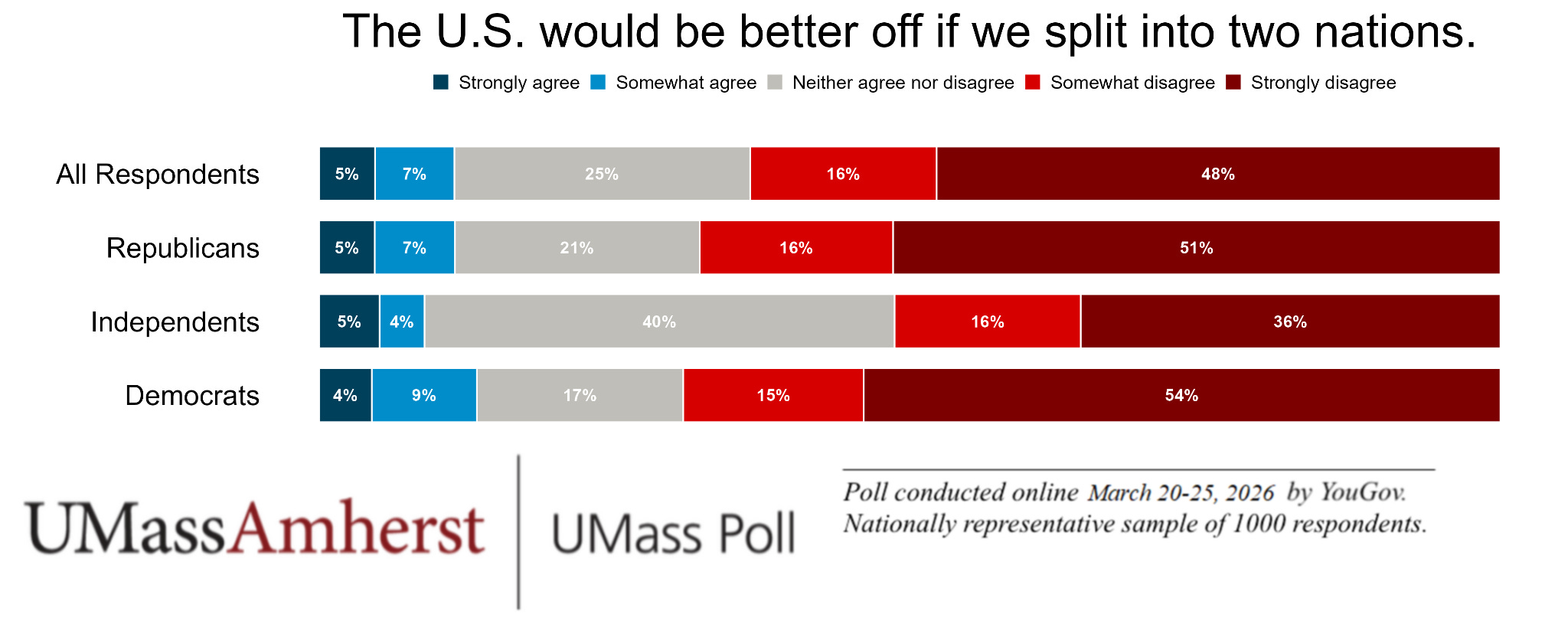
So, a quarter millennium into the American experiment, as hyper-polarization grips our body politic, people want to believe we’re still the United States of America.
Alexander Theodoridis is an associate professor of political science at the University of Massachusetts Amherst and codirector of the UMass Poll. His research focuses on American electoral politics, hyper-polarization, political violence, and survey methodology.
From Many, We is a Charles F. Kettering Foundation blog series that highlights the insights of thought leaders dedicated to the idea of inclusive democracy. Queries may be directed to fmw@kettering.org.
The views and opinions expressed by contributors to our digital communications are made independent of their affiliation with the Charles F. Kettering Foundation and without the foundation’s warranty of accuracy, authenticity, or completeness. Such statements do not reflect the views and opinions of the foundation which hereby disclaims liability to any party for direct, indirect, implied, punitive, special, incidental, or other consequential damages that may arise in connection with statements made by a contributor during their association with the foundation or independently.
A great and thorough review of the PROBLEM. That’s what most candidates, news platforms and groups like the Kettering Foundation do with great research and insight.
When I served as an officer on a nuclear submarine, I was trained that you don’t just bring problems to the attention of the Commanding Offficer …. You bring SOLUTIONS.
So after developing a set of solutions and teaching them to a couple of hundred students in adult lifelong learning programs at Miami Univeristy and UC, I wrote and published a book presenting and explaining the problems causing the divisiveness in our governing and in our citizenry, and the ineffectiveness in how we are governed, and detailing a list of 16 specific, practical, fact-based solutions.
The book is “American Turning Point: Repairing and Restoring Our Constitutional Republic”. The problems are many and will require many specific changes to the rules for governing written by the incumbents and partisan interest groups in all 3 branches of government. There are 16 changes proposed in the book, and I e added 4 more since publication in 2021, as new shinanigans have been foisted upon us since publication.
I am teaching all 20 solutions in classes at UD and Miami this fall, and double the normal of people signed up for the class … 94 total. I titled the class “Fixing Broken Government: What Broke It, What Will Fix It”. If you are interested in discussing a series of solutions and engaging with both “experts” and citizens, I’d be happy to participate.
By the way, Bill Muse, Chairman Emeritus of NIFI, reviewed my book and his comments are on the book’s Amazon.com page. I am also certified as a leader of NIFI discussions.
Sincerely,
Robert Viney
Author: “American Turning Point”
Website: www.citizenrules.org
Author: “The Solutions Newsletter”
Website: www.substack.com/thesolutionsnewsletter