

Those who live in democracies often imagine the greatest danger as a sudden collapse: tanks in the streets, a dramatic intervention, a clear rupture with the constitutional order. But more often than not, the real threats arrive slowly. Institutions weaken gradually. Laws are rewritten quietly. Civic space narrows step by step.
Latin America has lived through this process repeatedly. In recent years, Venezuela has become one of the clearest examples of how democratic institutions can be hollowed out while the language of sovereignty and legality remains formally intact. But Venezuela is far from the only example. Across the region, governments have introduced laws that restrict civil society organizations, limit access to information, or increase state control over independent institutions.
Over the past decade, pressure on civic space in the Americas has intensified. In Nicaragua, the government of Daniel Ortega has shut down thousands of civil society organizations in an effort to eliminate independent oversight and silence dissent. This campaign that led us to July 2026, when Ortega announced the outright abolition of elections, effectively closing off any remaining path for democratic accountability. Venezuela passed legislation in 2024 that severely restricts the activities of humanitarian and human rights groups, portraying them as enemies of the state.
Similar initiatives have emerged elsewhere in the region with critics calling attention to their similarities with Russia’s “Foreign Agent Law.” In Peru, new laws give authorities broad powers to control the work of organizations receiving international funding. Paraguay and El Salvador have adopted comparable frameworks, raising alarms among regional networks and human rights organizations. These measures are often presented as efforts to combat corruption, foreign interference, or organized crime. In practice, they actually weaken those who monitor state power.
When in Doubt, Ask Civil Society
Civil society organizations often become the last line of accountability. They document abuses when institutions refuse to do so. They accompany victims navigating broken legal systems. They gather evidence, defend access to information, and preserve the public memory of violations that governments would prefer to erase.
This work rarely receives the recognition it deserves. Yet in many countries, it is civil society that sustains the democratic muscle of society when formal institutions stop functioning and repression becomes normalized. This work is often carried out under extraordinary pressure. Throughout the region, journalists, researchers, and human rights defenders operate under surveillance, threats, and legal harassment. Many organizations have been forced into exile or operate with drastically reduced resources. International funding for civil society has also shrunk in recent years, leaving organizations struggling to maintain teams and programs.
Behind every organization are people whose lives have been reshaped by this work. Civil society is often treated as a sector of projects, reports, and deliverables. In reality, it is also a school. Activists, journalists, and community organizers develop forms of knowledge that cannot be taught in any university program: how to document abuses in opaque environments, how to support victims while protecting their security, how to analyze incomplete information in rapidly changing political contexts. When organizations lose funding or their staff are forced to leave the field to survive economically, that knowledge disappears with them. It cannot simply be replaced.
Despite these pressures, civil society in global majority countries continues to show remarkable creativity and resilience. One of the most important recent developments has been the growth of cross-regional collaboration. Journalists and democracy defenders from Venezuela, Nicaragua, and Cuba—countries that once felt far from each other—increasingly exchange experiences and strategies. Media outlets that would normally compete have begun to collaborate to fight disinformation and continue to inform their audiences under restrictive conditions. A wonderful example is the Investigative Rebel Alliance, a coalition of independent media devoted to investigative journalism in Venezuela, a country where freedom of expression has been reduced beyond its minimum.
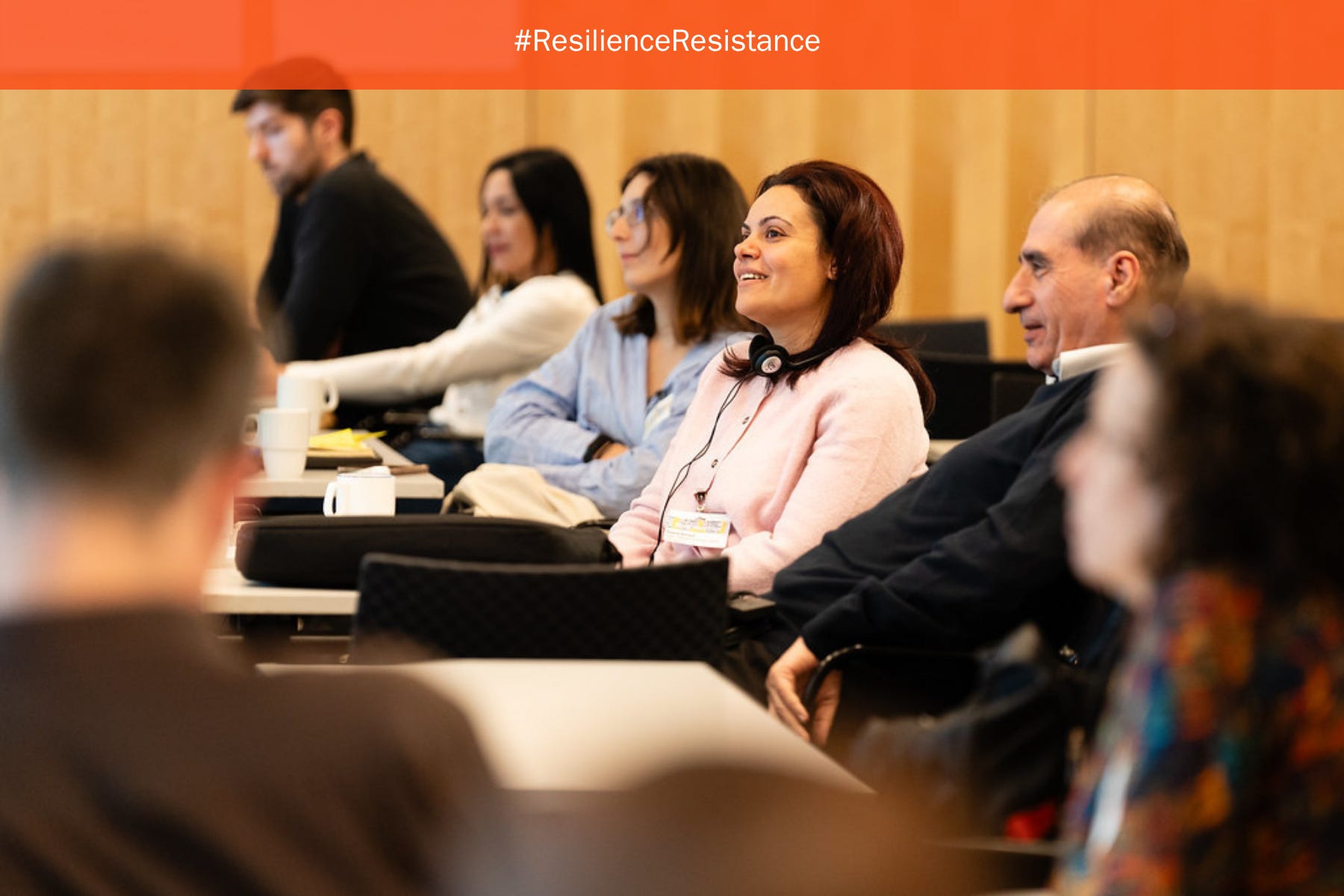
Civil society networks across Latin America share legal analysis, security practices, and advocacy strategies to confront similar patterns of repression. Even small initiatives can play an important role. The cafecitos organized by IFEX ALC, the Latin American and Caribbean alliance of members within the global IFEX network, are just one example. These organized spaces within regional networks have created opportunities for activists and journalists to meet, question their assumptions, and learn from each other’s experiences. While these connections may appear modest, they help build the relationships and trust that allow civil society to respond collectively to new challenges. Most participants leave the meetings having learned a few new tricks, but, more important, they come away feeling connected and less isolated.
These Collaborations Are Not Just Desirable, They’re Necessary
Authoritarian governments exchange tactics, technologies, and legal strategies. Surveillance practices travel across borders. Laws restricting civic space are copied and adapted from one country to another. In this context, civil society cannot afford to remain fragmented.
At the same time, civil society collaborations must also address long-standing inequalities in existing international partnerships. Too often, organizations from Western democracies occupy the role of hosts, facilitators, or agenda-setters, while actors from the global majority are expected to only provide local testimony or project implementation.
Yet the political landscapes that many societies, even those in the West, are now facing—institutional erosion, hybrid authoritarianism, shrinking civic space—are realities that civil society in the global majority has been navigating for years. Their experience is far from being peripheral knowledge; it is essential for creating successful strategies.
Building stronger partnerships therefore must have more horizontal forms of exchange. It requires acknowledging power imbalances, addressing intercultural misunderstandings, and being willing to have the difficult conversations about blind spots in international advocacy. Above all, it requires recognizing that the fight against authoritarianism is collective and cross-regional.
The boundaries that define civil society cooperation can no longer follow national borders. Democracies around the world are becoming increasingly connected through shared vulnerabilities. The stability that some societies once considered permanent is becoming less certain.
Latin America offers lessons that extend far beyond the region. Not because the region provides a blueprint for crisis but because its civil society has spent decades developing ways to navigate political instability, institutional collapse, and authoritarian pressure.
In a world where authoritarian governments share notes, civil society must do the same. Resilience must be built on the shoulders of giants. Solidarity cannot remain a distant, symbolic gesture. It must become a consistent practice of listening, learning, and building together across regions and experiences. Only then can the networks that defend democracy become strong enough to face the challenges ahead.
Laura Vidal is a Venezuelan researcher in digital rights, a freedom of expression advocate, and an intercultural communication educator. Her work also includes community and movement building and strategic communications among civil society organizations. She works as the communications manager for Digital Action and is a regional writer for IFEX.
Resilience & Resistance is a Charles F. Kettering Foundation blog series that features the insights of thought leaders and practitioners who are working to expand and support inclusive democracies around the globe. Direct any queries to globalteam@kettering.org.
The views and opinions expressed by contributors to our digital communications are made independent of their affiliation with the Charles F. Kettering Foundation and without the foundation’s warranty of accuracy, authenticity, or completeness. Such statements do not reflect the views and opinions of the foundation which hereby disclaims liability to any party for direct, indirect, implied, punitive, special, incidental, or other consequential damages that may arise in connection with statements made by a contributor during their association with the foundation or independently.