

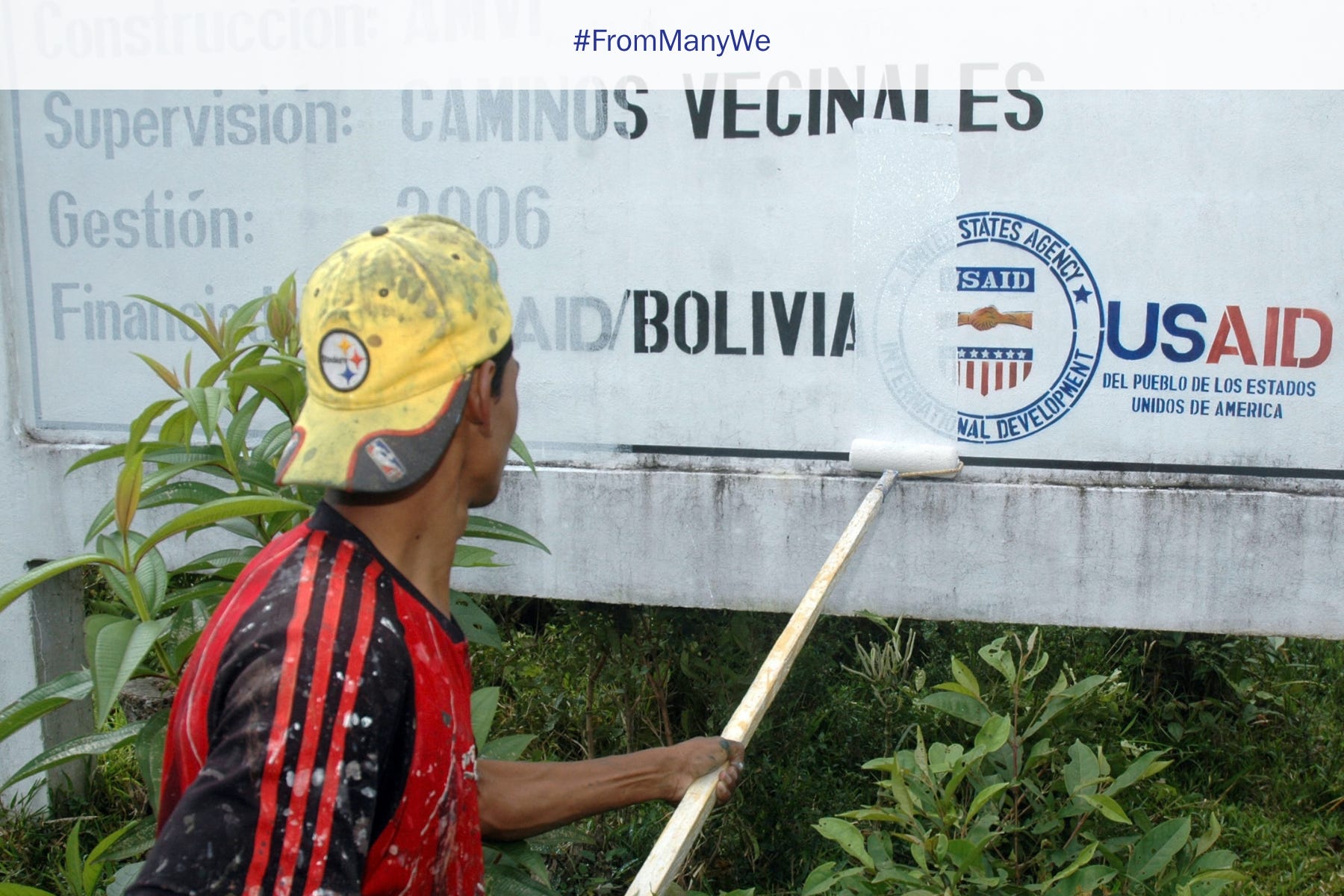
In moments of crisis, chaos, and confusion, democracy defenders are often challenged by assessing whether their efforts are having the desired effects. The US Agency for International Development (USAID) established a cutting-edge evaluation policy in 2011. Implementing rigorous monitoring, evaluation, learning, and other accountability measures from inception to completion of programs, these measures were continuously refined up until USAID’s dissolution in 2025. Compliance was also managed with close oversight from USAID’s Office of Inspector General. The dismantling of USAID was a disaster for global democracy and a boon to authoritarians throughout the world. But lessons and approaches from its work are being adapted to pro-democracy efforts in the United States and around the world, and this work is being assisted by new efforts and tools that provide access to the knowledge that USAID generated from its work.
Determining whether a strategy has been successful is particularly challenging in complex environments where cause and effect is usually not clear and theories of what will produce the desired outcomes are underdeveloped or not developed at all. I have experienced this challenge both in my work for USAID and in doing nonprofit democracy protection work in Ohio, where communicating impact to funders and other stakeholders can be difficult, especially during periods of rapid change. USAID was a global leader in pioneering assessment approaches in such environments, including a suite of complexity-aware monitoring and evaluation approaches. These approaches incorporate the uncertainty and unpredictability of the factors that make environments complex in the first place, such as shifting political attitudes and perceptions, challenging security situations, and other social and human considerations. They also require an openness to incorporating unanticipated results into assessments as well as the intellectual honesty to admit when desired effects have not been achieved and to iterate based on early failures and lessons learned.
Afghanistan: Define the Problem You Are Trying to Solve
USAID’s experience in Afghanistan highlights one of the greatest challenges of determining success in complex environments: problem definition. It is impossible to determine whether interventions are successful if the problem they are designed to solve is not well defined, or if the defined problem is not the correct one given the uncertainties and shifting variables inherent in complex situations. From the post-September 11 US intervention to USAID’s dissolution in 2025, USAID invested over $26 billion in assistance in Afghanistan. These programs ranged from sectoral interventions in health and education to humanitarian assistance to stabilization and democracy promotion efforts. Individually, many of these programs achieved success in their specific sectors or according to specific metrics that they set for themselves. Overall, however, they suffered from a strategic-level flaw that ultimately undermined the entire effort. In trying to do such a broad range of things, the USAID effort in Afghanistan missed the key problem that would defeat the effort there: the desired changes of that effort were at odds with Afghanistan’s political, social, and cultural factors that determined how Afghans resist outside influence and manage their society.
The specific effort that I worked on in Afghanistan in 2011 and 2012 illustrates this challenge. The Kandahar Provincial Reconstruction Team was initially a Canadian, and later American, joint civilian military unit whose purpose was to build capacity and assist officials from the Government of the Islamic Republic of Afghanistan to effectively govern Kandahar Province. This province included Kandahar City, Afghanistan’s second largest city and the historic stronghold of the Taliban. According to this stated goal, we succeeded spectacularly. The team transferred its responsibilities to the government officials that we had supported and partnered with in our mission. However, this success, and Kandahar’s subsequent higher level of resilience than other Afghan regions, was no bulwark against the Taliban sweep across the country in 2021 amid the collapse of the US supported government. We had solved the problem we were trying to solve, but it wasn’t the right problem.
Honduras: Develop Necessary Tools and Practices
What, then, does a more effective effort look like when it has well-defined problems, evaluation and learning approaches integrated into strategy development, and interventions adapted to updated context? One example of a useful tool toward this goal came from USAID’s mission in Honduras, which implemented a dedicated platform for evaluation and adaptation across its portfolio. USAID/Honduras largely focused on addressing the major drivers of outmigration from Honduras to the United States, including the high levels of crime and violence that led to chronic insecurity in the county. Given that insecurity is a complex problem with many different but interconnected facets, it was challenging to assess progress through the lens of any individual program. The portfolio-wide platform allowed for a more comprehensive and holistic look at the work that USAID was doing and provided the capacity to do more independent assessments of program effectiveness than would have been possible from within each individual program alone. Coupled with mixed-method approaches consisting of tools like surveys, focus groups, and regular team reflection and sensemaking efforts, program managers can have a more complete suite of tools for determining success in complex environments.
Bolivia: Check Assumptions and Adapt Theories of Change
During rapid shifts in operating context, practitioners working in complexity need to check in frequently on the assumptions that underpin their theories of change. Similarly, practitioners need to be constantly open to the possibility of unintended consequences and unexpected results of their efforts, especially ones that might disprove initial ideas for how changes would achieve desired outcomes. I participated in the January 2020 USAID and State Department assessment that determined what opportunities existed to support democratic actors in Bolivia following the 2019 resignation of President Evo Morales. Our assessment team initially assumed that social groups and activist organizations that had a long history of working with Evo’s political movement would not be open to the kinds of conversations about democracy in Bolivia that we were interested in, especially if supported with US funding. However, despite these misgivings, we arranged initial meetings with some of the groups. Surprisingly, they were far more open to potential partnerships than we originally anticipated, due in part to a previously unseen feeling that their voices had been silenced and co-opted for years. Through our initial outreach and the continued efforts of open-minded and entrepreneurial members of our program team, we were able to support conversations among a much wider range of Bolivians than we had previously thought possible.
Lessons for US Democracy Defenders
The United States has entered a period of democratic backsliding and rising authoritarianism similar to those experienced in many countries where USAID has worked. US democracy defenders who are trying to adapt to a chaotic, rapidly shifting environment can learn from the approaches that USAID took to determine whether its efforts were working. To start, US practitioners can ask themselves a series of questions about whether their approaches are ready to meet the challenges of our current moment:
Have we sufficiently defined the problem that we are trying to solve so that we will know if we are solving it? Is it the right problem given the context we are working in? How will we know when and how to shift if we need to?
Do we have sufficient and appropriate tools, approaches, and attitudes for determining whether what we are doing is working in a complex environment? Are we well enough resourced to keep up with a dynamic context that requires intensive management and reflection?
Do we understand the assumptions that underpin our theories of change about how we will succeed? How will we learn if those assumptions are invalid, and what leeway do we have to adapt our theories of change?
Luckily, efforts are underway, including searchable databases (such as the Development Knowledge Commons established by the USAID Knowledge Rescue Initiative) and new technological tools such as AI interfaces, to provide access to decades of knowledge that USAID generated about its programs. Despite the Trump administration’s efforts to block access to USAID’s Development Experience Clearinghouse, these new tools will allow development and democracy practitioners around the world to benefit from its lessons learned, including US democracy defenders.
Daniel Tirrell is the cofounder and coexecutive director of The Ohio Democracy Project. Previously, he worked for 14 years on political transition and violence prevention programs at USAID’s Office of Transition Initiatives.
From Many, We is a Charles F. Kettering Foundation blog series that highlights the insights of thought leaders dedicated to the idea of inclusive democracy. Queries may be directed to fmw@kettering.org.
The views and opinions expressed by contributors to our digital communications are made independent of their affiliation with the Charles F. Kettering Foundation and without the foundation’s warranty of accuracy, authenticity, or completeness. Such statements do not reflect the views and opinions of the foundation which hereby disclaims liability to any party for direct, indirect, implied, punitive, special, incidental, or other consequential damages that may arise in connection with statements made by a contributor during their association with the foundation or independently.